

 New Customers Save 20%
 Free Delivery over £75
 Easy Returns
 1M+ Happy Customers

The Mind-Boggling Paces of the 2026 London Marathon Elite Finalists — And Why Every Runner Who Crosses That Finish Line Is Already a Winner
Here's a number that will stop you in your tracks: 2:49 per kilometre.
That's the average pace Sabastian Sawe held — for 42.195 kilometres — to shatter the marathon world record at the 2026 TCS London Marathon and become the first human being to officially break the two-hour barrier in a sanctioned race. Two hours, fifty-nine minutes, and thirty seconds. Gone. History rewritten on The Mall, in bright April sunshine, in front of tens of thousands of stunned spectators.
Before we go any further, here's what we need you to understand: most recreational runners cannot sustain that pace for 400 metres. A single lap of a standard running track. That's not a criticism — that's just the staggering, almost incomprehensible reality of what these athletes are doing.
And here's the thing we really want you to hear: that doesn't make your marathon any less extraordinary.
What Just Happened in London?
On Sunday, 26 April 2026, the TCS London Marathon produced the most extraordinary morning in the history of the sport. The conditions were near-perfect — cool, dry, with a gentle easterly breeze that worked in the runners' favour across the final 10km stretch along the Thames.
Men's Elite Results
|
Place |
Athlete |
Country |
Time |
|
🥇 |
Sabastian Sawe |
Kenya |
1:59:30 (World Record) |
|
🥈 |
Yomif Kejelcha |
Ethiopia |
1:59:41 |
|
🥉 |
Jacob Kiplimo |
Uganda |
2:00:28 |
Three men broke the previous world record. In a single race. On the same Sunday morning, 59,000 other runners were simply trying to get to that finish line on The Mall.

Women's Elite Results
|
Place |
Athlete |
Country |
Time |
|
🥇 |
Tigst Assefa |
Ethiopia |
2:15:41 (Women's-Only World Record) |
|
🥈 |
Hellen Obiri |
Kenya |
2:15:53 |
|
🥉 |
Joyciline Jepkosgei |
Kenya |
2:15:55 |
Assefa smashed her own women 's-only world record. And the top three women finished within 14 seconds of each other — the closest elite women's podium in London Marathon history.
Let's Actually Break Down These Paces — Because the Numbers Are Jaw-Dropping
This is the part where the already-incredible becomes genuinely mind-bending.
Sabastian Sawe averaged 2:49 per kilometre — or 4 minutes 33 seconds per mile — for the entire marathon distance.
To put that in perspective, you can feel in your legs:
-
His average 100 metre time over the entire race was 16.9 seconds
-
His average 800 metre time was 2 minutes 16 seconds — which would have won him a bronze medal at the 1896 Olympic Games. He then repeated it 51 more times.
-
His 24th mile — at the point most runners are hanging on for dear life — was clocked at 4:12 per mile. He was accelerating.
-
He ran the second half of his marathon (59:01) faster than the first (1:00:29). A negative split. In a world record marathon.
Tigst Assefa's women's world record translates to a pace of approximately 3:12 per kilometre — a pace that, for context, most recreational runners can sustain for fewer than five minutes before needing to stop.
These are not simply fast runners. These are human beings operating at the absolute outer edge of what science previously believed possible.
So What Does This Mean For You?
Here's where we want to shift the conversation — because this is important.
When you look at those numbers, it's easy to feel a pang of something. Inadequacy, maybe. That creeping sense that your 4:30, your 5:00, your 6:30 marathon time is somehow embarrassing in comparison. That the sport belongs to people built entirely differently to you.
But that thinking is worth challenging directly.
The average marathon finishing time across all recreational runners sits at around 4 hours 8 minutes for women and 3 hours 35 minutes for men — and those are still extraordinary athletic achievements. A 4-hour marathon requires you to sustain a pace of 5 minutes 41 seconds per kilometre for 42.195 kilometres. Try running at that pace and maintaining it for an hour. It's hard. Genuinely hard.
And for beginners, finishing a marathon at any pace — even 5 to 6 hours — is a triumph that the vast majority of the global population will never experience.
The marathon distance is the achievement. Not your position on the results sheet.
Sawe's record and your Sunday long run exist in the same sport for the same reason: because the marathon is one of the few events in human life where elite world-record holders and first-time finishers share the same road, breathe the same air, and cross the same line.

Why Distance Running Is Worth Every Step — The Science Backs You Up
If you've ever needed a reason to lace up — or a reminder of why you already do — here it is.
The research on distance running is unambiguous in its enthusiasm. A landmark study published in Scientific Reports (NURMI Study, 2022) found that recreational runners across all distances from 10km to ultra-marathon consistently displayed strong health indicators across eight dimensions — from cardiovascular health and healthy body weight to reduced rates of chronic disease and strong mental wellbeing scores.
Running — even slow running, even short running — is associated with a meaningfully lower risk of heart disease, type 2 diabetes, stroke, and certain cancers. Research published in Harvard's Chan School of Public Health found that running for as little as 15 minutes a day may reduce the risk of major depression by 26%. A UK Biobank analysis of over 161,000 participants linked regular running with significantly lower rates of both depression and anxiety.
And here's the part that surprises most people: it doesn't have to be fast to work. A University of Edinburgh scoping review of 116 studies concluded that running bouts of variable lengths and intensities all improved mood and mental health outcomes. Slow running counts. Comfortable running counts. Running with your friends counts.
The runners' high is real too — a rush of endorphins and endocannabinoids that turns a hard morning into a good one. And the sense of achievement that comes from completing distance training? Research published in the International Journal of Environmental Research and Public Health found that marathon runners demonstrate measurably lower scores for tension, anger, fatigue, and depression compared to non-runners.
Distance running makes you healthier, happier, and sharper. The world record times don't change any of that.
Spring Is Here — and There's No Better Time to Get Out There
The spring conditions across the UK right now are as close to perfect for running as you're going to get. Cooler temperatures, longer evenings, firm paths, and the kind of clear mornings that make a long run feel like a genuine gift.
The marathon-performance literature places the optimal temperature window for running at roughly 7–13°C — which is precisely what most of the UK sits in right now. The same conditions that helped produce world records in London this weekend are waiting for you outside your front door.
If the London Marathon results have lit something in you — that instinct to sign up, to train, to set a goal — act on it. Not to run like Sawe. But to run like you. Further than you've run before, or faster than last time, or simply with more people you enjoy being around.
If you're new to distance running and wondering whether to sign up for your first race, we've put together a useful guide to getting started with marathon season — including everything you need to know about training, preparation, and what to expect on race day.
One Thing the Elites Know That Every Runner Should
The athletes who compete in events like the London Marathon don't just train their legs. They train their visibility.
When Sawe crossed the finish line on The Mall, he'd been visible — to photographers, to marshals, to the entire watching world — from the moment he left Blackheath. That visibility isn't incidental. It's deliberate, trained, and safety-conscious.
For most of us running before sunrise, after work in the dark, or on quiet roads early on a Sunday morning, visibility is even more critical. The roads are shared, and drivers aren't always paying attention.
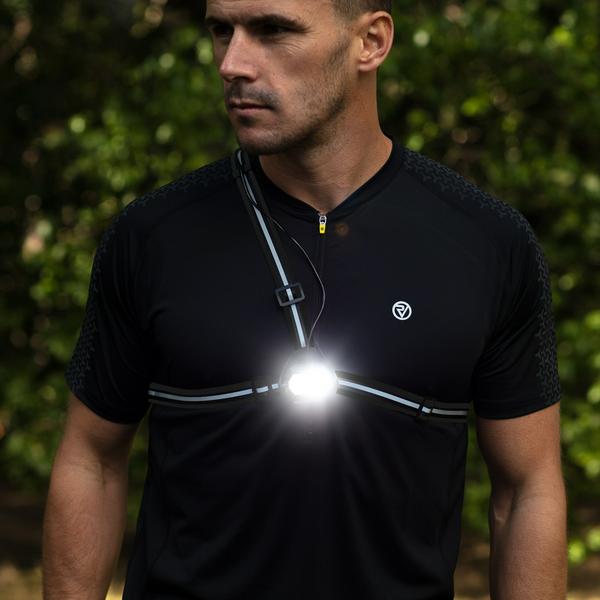
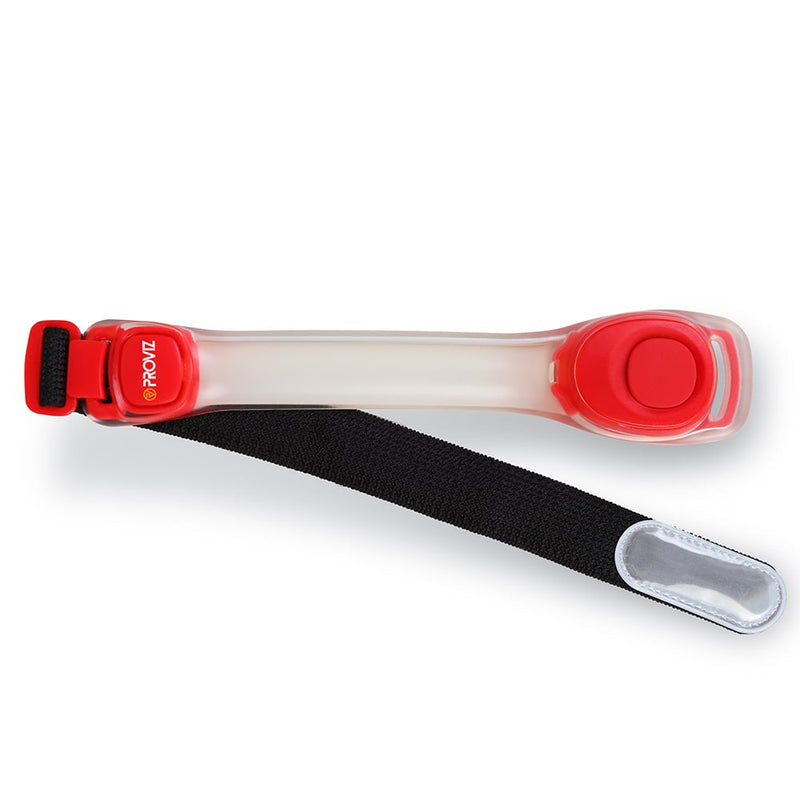
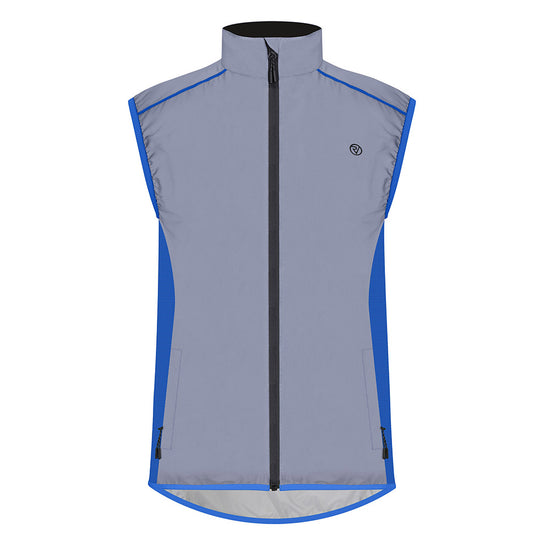
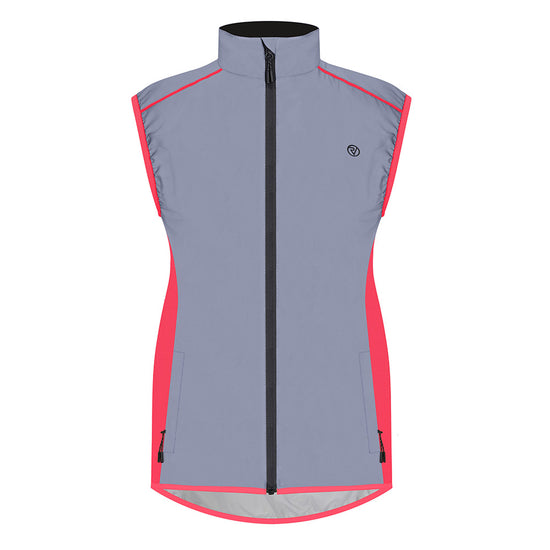
This is where your kit matters more than you might think. The right high-visibility running gear isn't about looking like a professional — it's about making sure the people who need to see you actually see you. It's the difference between a run that goes well and one that doesn't. And it's the simplest possible way to give yourself the peace of mind to focus on what matters: putting one foot in front of the other.
Proviz is trusted by over 1 million customers worldwide to support their outdoor training and offer extra peace of mind when using the roads. Because the roads belong to all of us — and staying visible on them is non-negotiable.
Every Finisher Is a Winner. Now Go Prove It.
Sabastian Sawe ran 42.195 kilometres in under two hours. That is one of the most extraordinary things any human being has ever done. It deserves every word of wonder being written about it this week.
And when you cross your finish line — whether that's a parkrun, a 10K, a half marathon, or a full 42.195 kilometres — you will have done something extraordinary too.
The distance is the challenge. You are the victory.
→ Shop the Proviz Running Collection
Because the right gear doesn't just get you out the door — it gets you home safely.
Proviz Sportswear — trusted by over 1 million outdoor athletes worldwide.