

 New Customers Save 20%
 Free Delivery over £100
 Easy Returns
 1M+ Happy Customers

A bright jacket helps. But at night, the thing that makes a driver look twice is movement. Here's what the research says, and how to put reflective detail exactly where it counts.
You probably think you're more visible than you are
Most of us head out in the dark believing drivers can see us. Research suggests otherwise. Studies led by Professor Joanne Wood (Queensland University of Technology) and Professor Richard Tyrrell (Clemson University) found that pedestrians and cyclists consistently overestimate how visible they are to drivers at night.
The gap matters. A driver doesn't just need to see something on the road. They need to recognise it as a person, early enough to react.
Why bright colours fade after dark
Fluorescent yellows and oranges work well in daylight. They absorb ultraviolet light and re-emit it as visible colour, so they pop against grey streets.
After sunset, there's very little UV to convert. Under headlights, a fluorescent top can look much like any other mid-tone fabric. That's why colour alone isn't enough once the clocks go back.
Reflective material works differently. It bounces headlight beams straight back towards the driver, so you light up in their line of sight.
The research: drivers recognise movement
In the 1970s, psychologist Gunnar Johansson showed that people can recognise a human figure from just a few points of light placed on the joints. Static, those dots look random. The moment they move, the brain instantly reads them as a person walking or running. Researchers call this biological motion, or biomotion.
Road-safety researchers have since tested this outdoors at night. In studies by Wood, Tyrrell and colleagues, drivers recognised pedestrians and cyclists at noticeably greater distances when reflective markings were placed on moving joints (wrists, elbows, knees and ankles) than when the same people wore a reflective vest alone.
The takeaway is simple:
- A reflective torso tells a driver something is there.
- Reflective limbs tell a driver someone is there, and that they're moving.
For cyclists, the ankles and lower legs are especially powerful. They trace a constant circular pedalling motion that's unmistakably human.
Where to add reflective detail
Think of it as building your own biomotion outline. Start with whatever moves most for your sport, then add from there.
Ankles and legs — the biggest win for cyclists and runners
Your feet and lower legs move the most, whether you're running or pedalling. Reflective ankle bands are the quickest upgrade, and they slip over any trousers or leggings. For full coverage, reflective cycling trousers put the detail along the whole leg.
Arms and wrists — the runner's natural signal
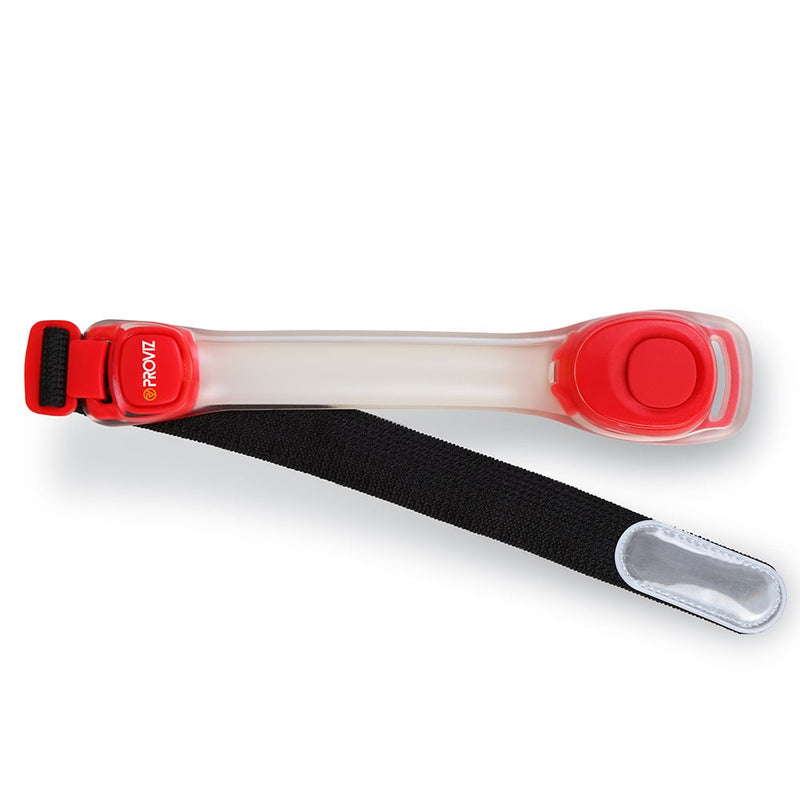
Arm swing is one of the most recognisable human movements. Reflective arm bands sit on the forearm or upper arm and catch light with every stride. They're also handy for walkers and dog walkers.

Hands — make every signal count
On the bike, your hands do the talking. Reflective gloves make turning and stopping signals visible to drivers behind you, exactly when it matters most. For runners, they add movement at the end of each arm swing.

Hair — visibility that moves with you
A ponytail swings with every step. A reflective scrunchie turns that motion into a moving light point. A reflective headband adds a visible marker at head height, useful when you're running towards traffic.

Build your outline: a quick guide
|
Activity |
Start here |
Then add |
|---|---|---|
|
Running |
Ankle bands |
Arm bands, scrunchie or headband |
|
Cycling |
Ankle bands or reflective trousers |
Reflective gloves |
|
Walking and commuting |
Arm bands |
Ankle bands |
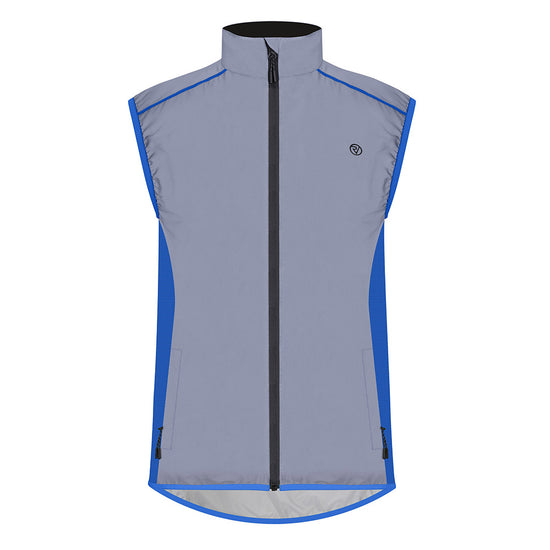
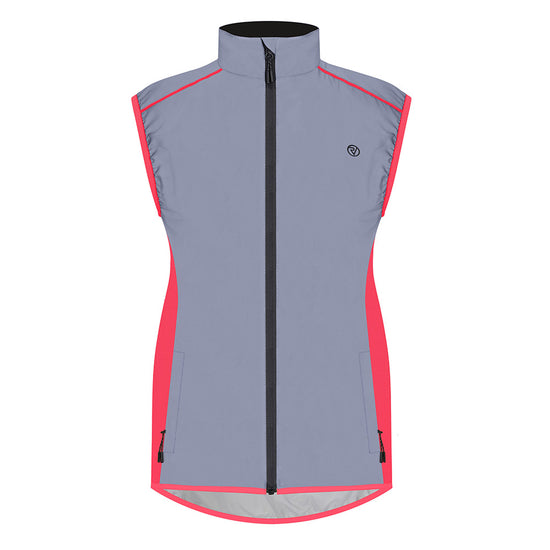
Combine limb pieces with a reflective jacket or top for the strongest effect. Your core says object. Your limbs say person.
Small kit, big difference
You don't need to change your whole wardrobe to be seen. A few lightweight pieces on the parts of you that move can help a driver recognise you sooner. That's extra time to slow down, give space and pass safely.
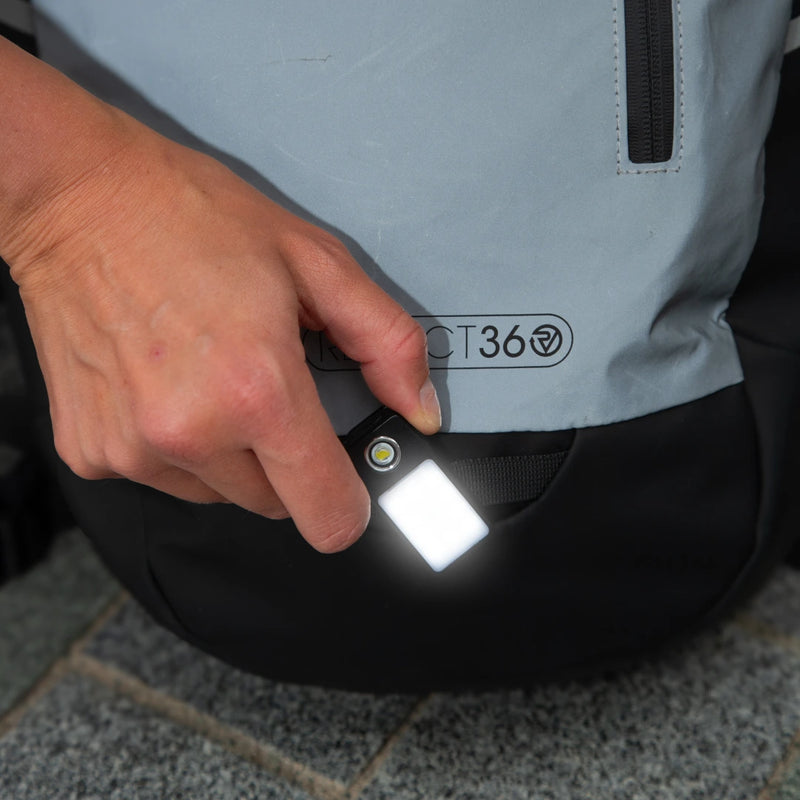
Our REFLECT360 technology is designed to bounce light back from every angle, so you're visible whichever way you're moving.