

 New Customers Save 20%
 Free Delivery over £100
 Easy Returns
 1M+ Happy Customers

The clocks go back at 2 am this Sunday, 25 October. On Friday, your ride home finishes in the last of the daylight. On Monday, the same ride, at the same time, on the same route, happens in the dark.
Nothing about you or your bike has changed. The conditions have. Here's what that shift means for your commute, what the law asks of you after dark, and a simple kit check to do this weekend so Monday's ride feels just as confident as last week's.
What actually changes for your commute

Your ride home moves into the dark overnight. Sunset shifts an hour earlier on the clock in a single day. Across much of the UK, that means a finish-work ride that was at dusk last week now starts after dark.
Dusk is the hardest light to be seen in. Twilight is when contrast is lowest. Drivers' eyes are still adjusting, street lights may not be fully on, and a dark jacket blends straight into the background. For the next few weeks, a lot of evening commutes will fall right in that window.
Everyone's habits are still on summertime. You might pack the same kit you wore last week. Drivers on their usual route home aren't yet expecting to meet cyclists in the dark. For the first week or two, both sides are working from old assumptions — so it's worth making yourself impossible to miss.
The lighter mornings won't last. Your ride in gets brighter for a few weeks after the change. By late November the mornings are dark again, and by December most commuters ride in the dark both ways. Low winter sun on the morning ride brings its own glare problem, too.
The conditions change at the same time. Wet roads, fallen leaves, colder hands and slower reactions all arrive alongside the darkness. Leave a little more room, brake a little earlier, and give yourself an extra few minutes so you're never rushing.
What the law says about riding after dark
In the UK, lights are a legal requirement between sunset and sunrise, not an optional extra. After this weekend, that window covers most evening commutes.
Under Rule 60 of the Highway Code, your bike must have:
- A white front light, switched on
- A red rear light, switched on
- A red rear reflector
- Amber pedal reflectors (on bikes made after 1 October 1985)
Flashing lights are allowed. The Highway Code recommends a steady front light if you ride on roads without street lighting. The legal detail sits in the Road Vehicles Lighting Regulations 1989.
What you wear matters too. Rule 59 advises light-coloured or fluorescent clothing in daylight and poor light, and reflective clothing or accessories — such as a belt, arm or ankle bands — in the dark.
How to be seen on the darker commute
Lights first. A front and rear light is the legal starting point, and the most important piece of kit you own from this weekend. Rechargeable lights only help if they're charged, so get into the habit of plugging them in when you get home. A matched set like the Canopus & Vega Front & Rear Bike Light Set covers both ends in one go.
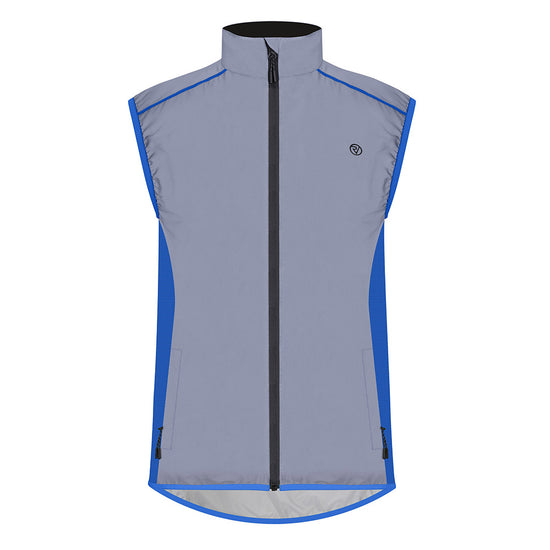
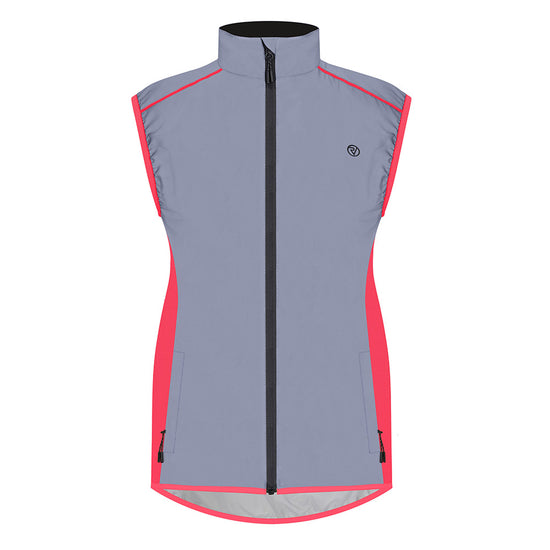
Fluorescent and reflective do different jobs. Fluorescent colours glow in daylight and dusk, when there's still UV light around. Reflective materials do nothing in daylight but shine back brightly when car headlights hit them after dark. Your commute now covers both conditions, so you need both. A reversible jacket gives you fluorescent on one side and reflective on the other — see the Men's Reflective Reversible Cycling Jacket and Women's Reflective Reversible Cycling Jacket.
Put reflectives where you move. Reflectives on your ankles, knees and wrists move as you pedal and signal. That movement helps drivers recognise you as a person, and recognise you sooner, than reflectives on your torso alone. It's also why the Highway Code mentions arm and ankle bands by name. A pair of Reflective Arm/Ankle Bands is the simplest way to add it.

Your weekend kit check
Ten minutes this weekend means Monday's ride home is sorted before it starts.
- Charge your front and rear lights, and check they still clip on securely
- Check your rear reflector and pedal reflectors are clean and in place
- Pack a reflective layer for the ride home, even if you leave in daylight
- Add reflectives to your ankles or wrists
- Pack gloves for colder evenings
- Check your tyres and brakes are ready for wet, leafy roads
- Ride your route once in the dark and note any unlit or tricky stretches
Ready for Monday
The dark evenings are here until spring, but your commute doesn't need to change. Charged lights, a reflective layer and a few reflectives where you move, and you'll ride home as confidently as you did last week.