

 New Customers Save 20%
 Fast Shipping
 Easy Returns
 1M+ Happy Customers

The clocks haven't changed yet. Your ride home already has.
The UK clocks go back on Sunday 25 October 2026. In the US, daylight saving ends a week later on Sunday 1 November. Either way, the commute you've been doing in daylight since spring is about to happen in the dark.
And darkness rarely arrives alone. Autumn and winter bring low cloud, river mist, fog that sits in the valleys until mid-morning, and the kind of heavy rain that turns headlights into a wall of glare. These are the conditions where a driver's eyes have the least to work with, and where a good set of bike lights does the most work.
This guide covers what to look for in a bike light for 2026, how to set up your bike for the conditions you'll actually ride in, and which Proviz lights our riders reach for most when the nights draw in.
Why bike lights matter more from October onwards
Year after year, Department for Transport collision data records "failed to look properly" as the most common contributory factor in reported road collisions in Great Britain.
In plain terms, the most common reason for a collision is that someone wasn't seen. Lights don't make you invisible to danger, but they give every driver, pedestrian and fellow rider the best possible chance of spotting you early.
What UK law says
Under Highway Code Rule 60, when you ride at night, your bike must have:
- A white front light, switched on
- A red rear light, switched on
- A red rear reflector
- Amber pedal reflectors, if your bike was made after 1 October 1985
Flashing lights are permitted, but the Highway Code recommends a steady front light when you ride somewhere without street lighting.
Riding in the US?
Lighting rules are set state by state. Most states require a white front light at night and a red rear light or reflector. Check your state's rules before your first dark commute of the season.
What to look for in a bike light in 2026
Brightness (lumens)
Lumens measure how much light a lamp puts out. For lit town and city roads, 200 to 300 lumens up front is a solid starting point. For unlit lanes, towpaths and country roads, aim for 500 lumens or more so you can see the surface ahead, not just be seen. The Proviz Rigel Front Bike Light delivers 500 lumens for exactly that kind of ride.
Beam pattern
More lumens are only useful if they land in the right place. In fog and heavy rain, a high, scattered beam bounces back off water droplets and dazzles you and everyone else. Look for a focused, low-trajectory beam. Proviz front lights use an anti-glare Crysta-Lite lens with a near-range, low beam designed to light the road without blinding oncoming traffic.
Side visibility
Junctions and roundabouts are where you most need to be seen from the side. A wide-angle rear light makes you visible as a driver pulls out, not only when they're directly behind you. The Vega rear light in our Canopus & Vega set offers a 220-degree wide-angle design.
Waterproofing
Winter riding means rain and road spray. Check the IPX rating: IPX4 resists splashing water and rain, and IPX5 handles water jets. Every Proviz bike light in this guide is rated IPX4 or above, with the Rigel rated IPX5.
Battery and charging
USB rechargeable lights save money and waste over a winter of daily commutes. Check the run time against your longest ride, then add a buffer, because cold weather shortens battery life. A battery level indicator stops you finding out the hard way.
Modes
You want a steady mode for unlit roads and a flash mode to catch attention in traffic. Several brightness levels let you stretch battery life on familiar routes.
Mounting
Tool-free, quick-release brackets make it easy to take your lights inside when you lock up, which also protects them from theft and the cold.
Our best-selling bike lights for autumn and winter 2026
These are the four bike lights Proviz riders choose most. Every one is USB rechargeable and splash-resistant to IPX4 or better.
|
Light |
Price |
Position |
Waterproof |
Weight |
|---|---|---|---|---|
|
£19.99 |
Helmet, front and rear |
IPX4 |
50g |
|
|
£34.99 |
Bars and seat post |
IPX4 |
131g + 31g |
|
|
£24.99 |
Handlebars |
IPX5 |
85g |
|
|
£14.99 |
Seat post, bag or helmet |
IPX4 |
26g |
1. LED360 2-way Helmet Light: front and rear from one light
Our best-selling bike light combines a front light and an integrated rear light in a single 50g unit that sits on your helmet. Mounting your light at head height puts it in a driver's natural eyeline, above car bonnets and roadside hedges. It also points wherever you look, which helps when you glance into a junction or check over your shoulder. Choose steady or flashing modes, and recharge it by USB between rides.

It works best as an extra layer of visibility alongside bike-mounted lights, rather than a replacement for them.
2. LED360 Canopus & Vega Front & Rear Bike Light Set: the complete winter setup
If you're starting from scratch, this set covers the legal basics and more in one box. The Canopus front light delivers 300 lumens through an anti-glare Crysta-Lite lens with a low, near-range beam, so you light the road without dazzling drivers coming the other way. Its 2600mAh lithium-ion battery runs for up to 8 hours in constant mode, with a battery level indicator so you're never caught out.
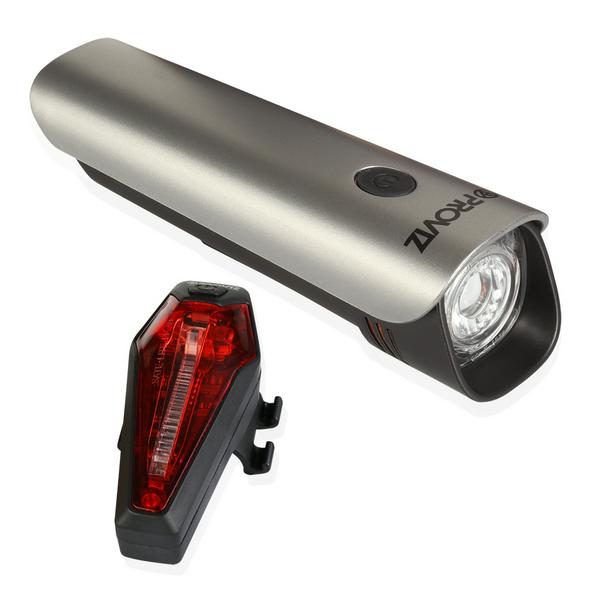
The Vega rear light uses a 220-degree wide-angle design to make you visible from the side as well as behind. Both lights are IPX4 rated for rain and spray, and both mount without tools.
3. LED360 Rigel Front Bike Light: for unlit roads and lanes
As featured in Road.cc, the Rigel is our brightest dedicated bike light at 500 lumens. It uses a CREE XHP50.2 LED and the same anti-glare, low-trajectory beam design as the Canopus, so the extra power goes onto the road, not into oncoming drivers' eyes.
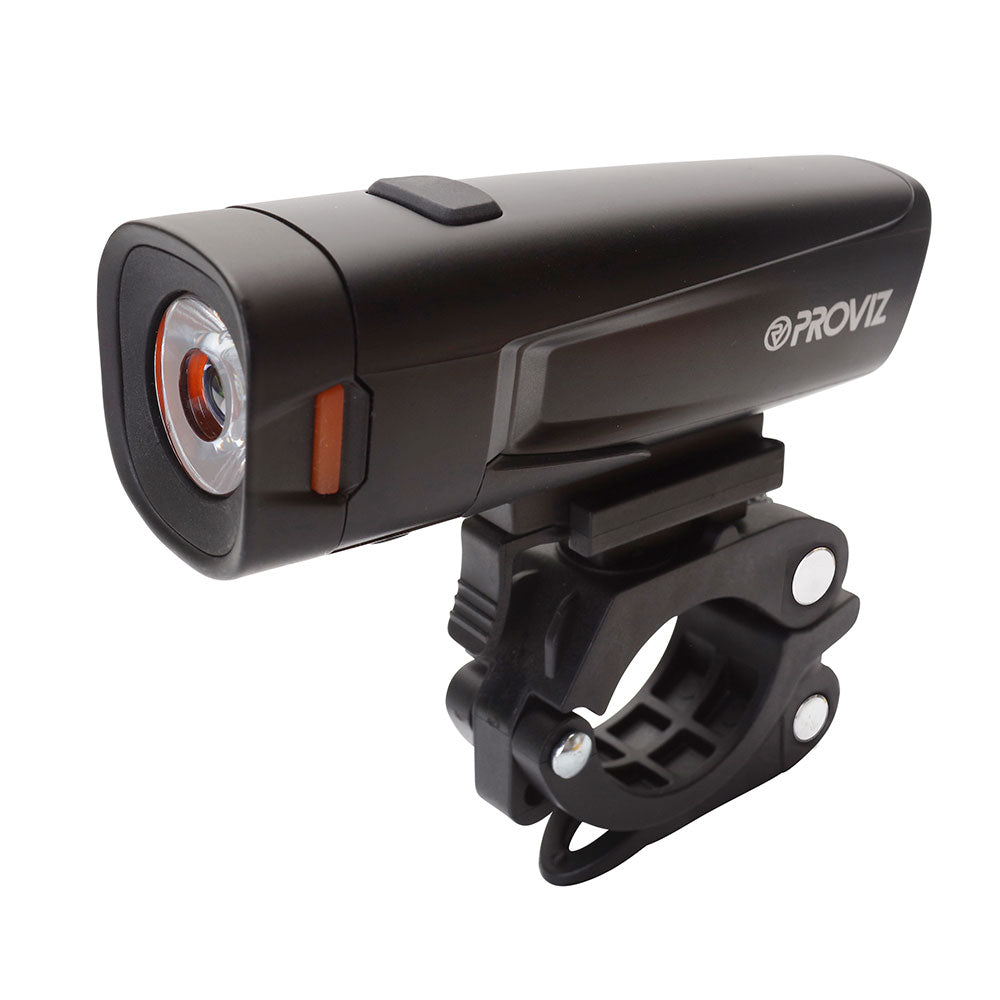
It's built for the worst of winter. The IPX5 rating handles heavy rain and road spray, and six modes let you balance brightness against battery: up to 6 hours on full beam, or 11 hours on low. If your commute includes country lanes, towpaths or unlit cycle routes, start here.
4. LED360 Procyon Rear LED Bike Light: small, light, versatile
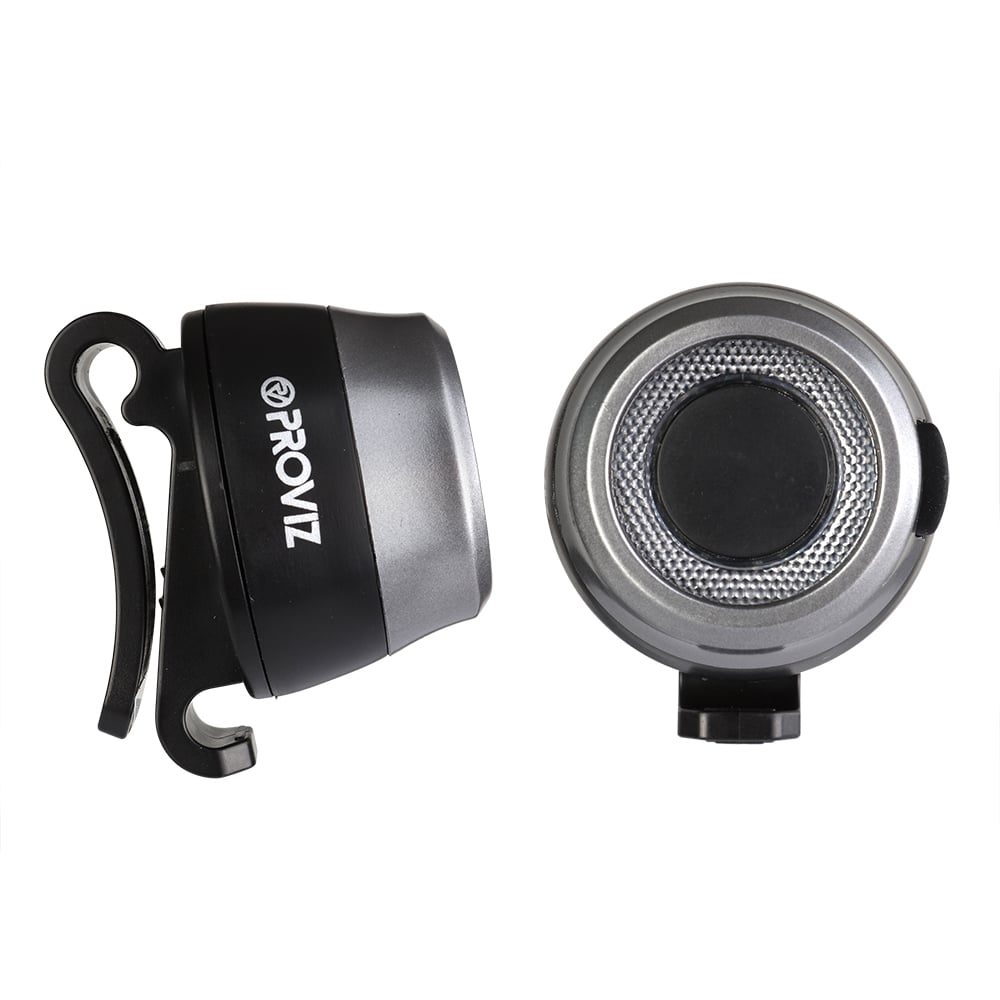
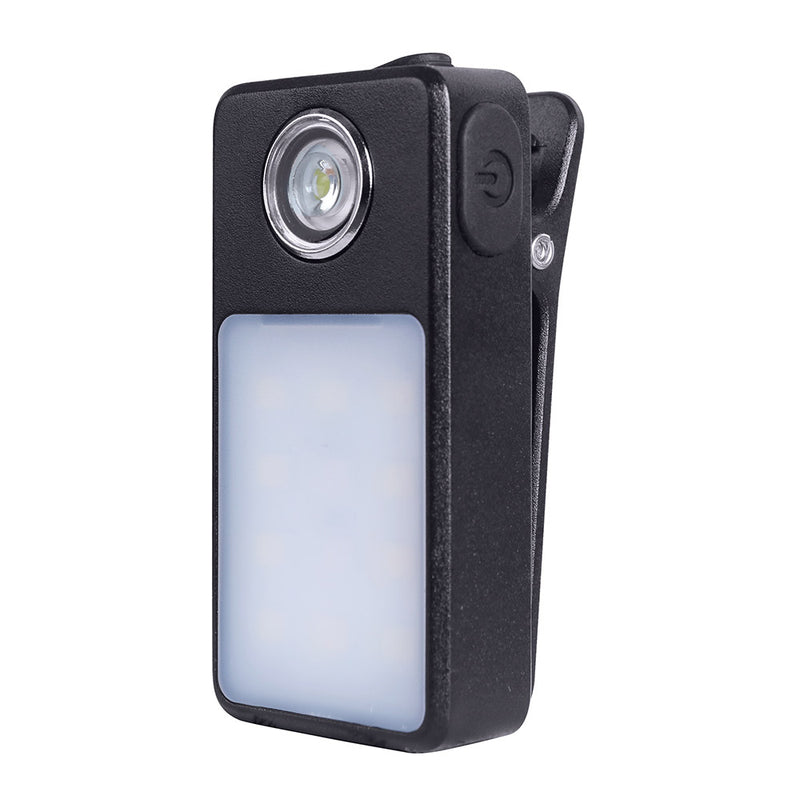
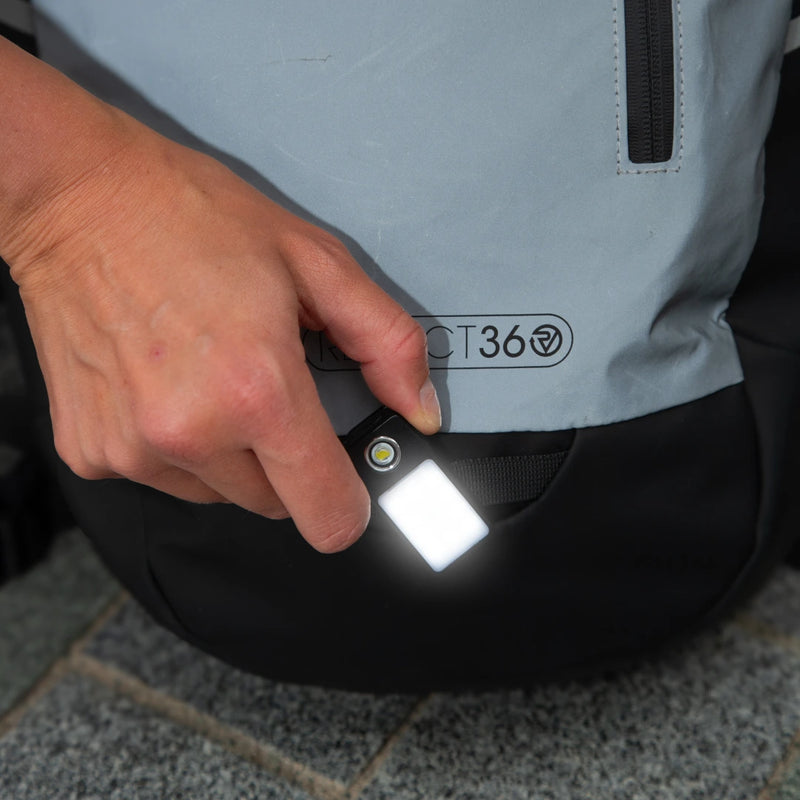
At 26g, the Procyon is easy to forget until you need it. Clip it to your seat post, rucksack or helmet with the quick-release fixing, and choose full, low or flash modes. Run time is up to 4 hours, so it suits shorter commutes or works as a backup rear light. Pair it with the Rigel for a strong front-and-rear setup.
Which setup suits your ride?
You don't need every light. Pick the description that sounds most like your winter riding.
The town and city commuter
Street lights, traffic, junctions and roundabouts. Your priority is being seen from every angle. Start with the Canopus & Vega set for legal front and rear lighting with wide-angle side visibility, then add the 2-way Helmet Light to put extra light in drivers' eyeline at junctions.
The lane and towpath rider
Unlit roads, rural routes and cycle paths with no street lighting. Your priority is seeing the road surface ahead. Choose the Rigel Front Bike Light for 500 lumens of focused beam, paired with the Procyon Rear Light. Use steady mode up front, as the Highway Code recommends on unlit roads.
The all-weather, all-hours rider
Early starts, late finishes, long rides in rain and fog. Your priority is backup. Run the Rigel up front and the Vega or Procyon at the rear, and add the 2-way Helmet Light so you still have a front and rear light if a battery runs low on the way home.
Riding in mist, fog and heavy rain: 6 quick tips
- Angle your front light down. In fog, a beam pointed too high reflects straight back at you. Tilt it so the brightest part lands on the road a few metres ahead.
- Drop the brightness in thick fog. Full power can create glare in dense mist. A medium setting often shows the road more clearly.
- Switch your rear light to steady in poor visibility. A constant red light helps drivers judge your distance and speed. If you run two rear lights, set one steady and one flashing.
- Dry and charge your lights after every wet ride. Wipe them down, let them dry indoors, and charge them ready for the next day. Cold and wet both drain batteries faster.
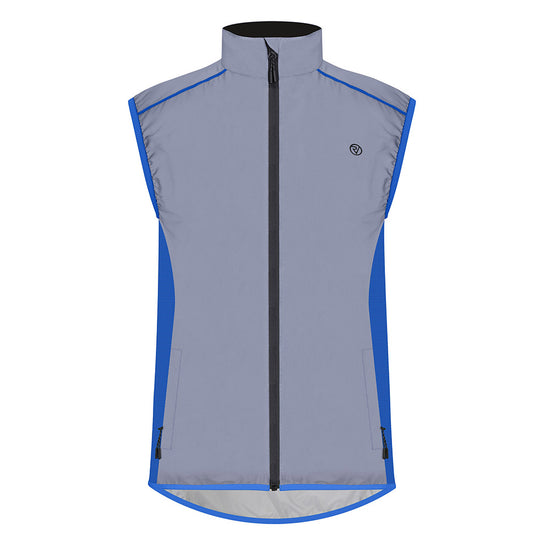
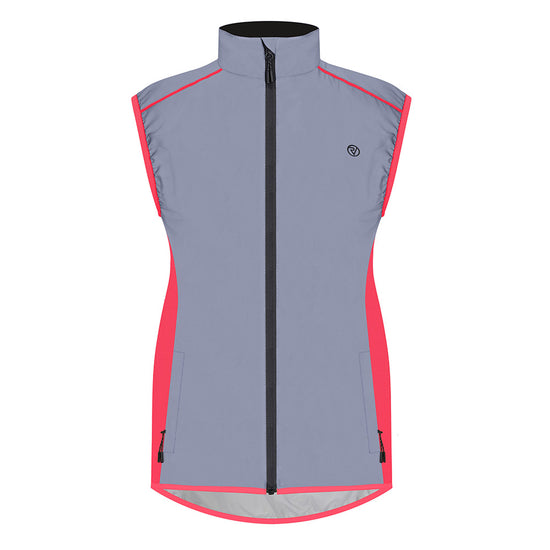
- Add reflective layers. Lights tell drivers something is there. Reflective clothing shows them it's a person, and how they're moving. Proviz REFLECT360 kit reflects light from every angle.
- Clean your lenses. Road grime and spray cut light output. A quick wipe before you set off makes a real difference.
Bike lights FAQs
How many lumens do I need for a bike light?
For lit urban roads, 200 to 300 lumens up front is enough to be seen. For unlit roads and lanes, choose 500 lumens or more so you can see the road surface ahead.
Is it a legal requirement to have lights on my bike in the UK?
Yes. Between sunset and sunrise, Highway Code Rule 60 says your bike must have a white front light and a red rear light switched on, plus a red rear reflector. Bikes made after 1 October 1985 also need amber pedal reflectors.
Are flashing bike lights legal?
Yes, in the UK. The Highway Code recommends a steady front light when riding somewhere without street lighting.
Are helmet lights a good idea?
A helmet light puts you in a driver's eyeline and points wherever you look. Use one alongside bike-mounted lights, not instead of them.
When do the clocks go back in 2026?
In the UK, on Sunday 25 October 2026. In the US, daylight saving time ends on Sunday 1 November 2026.