

 New Customers Save 20%
 Fast Shipping
 Easy Returns
 1M+ Happy Customers

The clocks go back this Sunday. Your commute home changes overnight.
On Sunday 25 October, the UK clocks go back an hour. From Monday, the route you rode or ran home in daylight last week happens an hour closer to dark. Same roads, same time, very different visibility.
Most of what keeps you safe on a dark commute comes down to three things: being seen, being recognised as a person, and letting drivers judge where you are heading. This guide covers all three. You'll learn what reflective kit actually does after dark, where to place it, how to set up your lights, and how to plan a route that works in winter.
It's written for UK cyclists and runners, whether you commute every day or a couple of times a week.
Fluorescent and reflective do different jobs
Many commuters assume a bright yellow jacket keeps them visible at night. It doesn't. Fluorescent fabric works by converting daylight UV into brighter colour, so it shines in daylight and at dusk. Once it's properly dark, there's no UV for it to work with.

Reflective material works differently. It bounces light from a car's headlights straight back towards the driver, so you appear brightly in their line of sight. That's why the Highway Code (Rule 59) advises light-coloured or fluorescent clothing by day and reflective clothing or accessories in the dark.
|
Light conditions |
Fluorescent |
Reflective |
|---|---|---|
|
Daylight |
Works well |
Little effect |
|
Dusk and dawn |
Works well |
Starts to work as headlights come on |
|
Full dark |
Little effect |
Works well when lit by headlights |
For a winter commute, you need reflective. The evening ride or run home now starts at dusk and finishes in the dark, so it's worth having both covered.
Put reflective kit where you move
A reflective jacket tells a driver something is there. Reflective kit on your moving joints tells them it's a person. The up-and-down motion of ankles and the swing of arms is a pattern drivers instantly recognise as human.
That makes small accessories some of the most effective kit you can buy. Prioritise these four areas:
- Ankles. When you pedal or run, your ankles move more than any other part of you. Ankle bands are the single biggest upgrade for most commuters.
- Wrists and hands. Cyclists need their hand signals seen at junctions. Runners' arms swing with every stride.
- Torso. A reflective jacket, gilet or top gives drivers the largest surface to pick up in their headlights.
- Head and back. These sit at a driver's eye line, especially in taller vehicles such as vans and buses. If you wear a backpack, it covers your jacket, so the bag needs to be reflective too.
Your cycling commute kit
Start with one reflective layer, then add the small pieces that cover your moving parts. You don't need everything at once.
|
What it covers |
What to look for |
Proviz option |
|---|---|---|
|
Main layer, wet weather |
A waterproof jacket with full reflective coverage |
City Men's Reflective Commuter Cycling Jacket or City Women's |
|
Main layer, milder days |
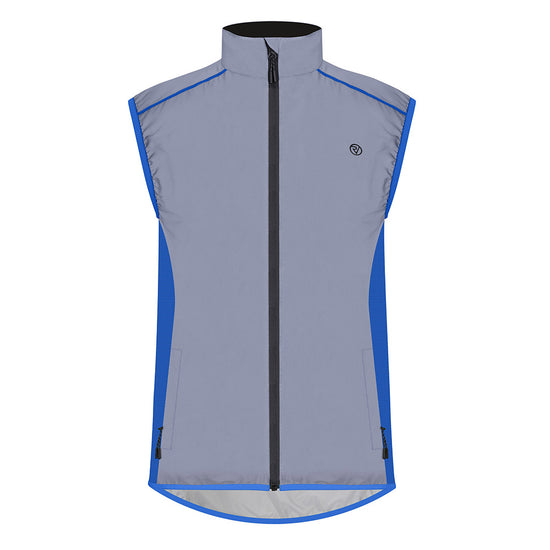
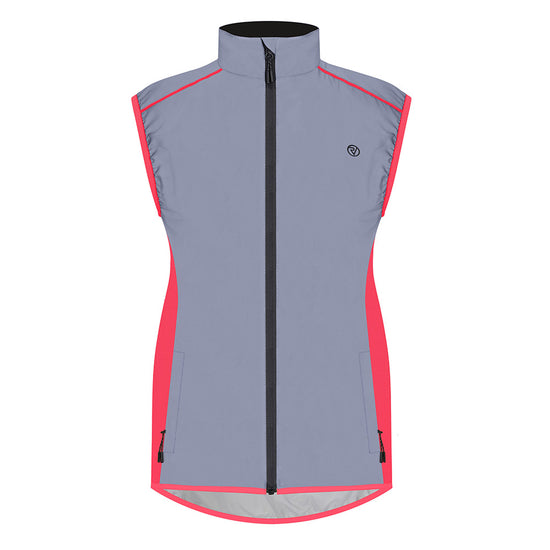
A light gilet you can wear over any top |
|
|
Ankles |
Bands that sit just above your shoe |
|
|
Hand signals |
Reflective gloves, so your signals show at junctions |
|
|
Your bag |
A reflective backpack, or a cover for the bag you already own |
Fully Reflective 30L Backpack or Fully Reflective Backpack Cover |
|
Side-on visibility |
Reflective stickers on your frame, forks and helmet |
Side-on visibility is easy to overlook. At roundabouts and side roads, drivers often see you from the side, so reflective detail on your frame and wheels matters as much as kit on your back.
Your running commute kit
Running commuters share pavements and crossings with traffic coming from every direction. Cover your front, your back and your moving limbs.
|
What it covers |
What to look for |
Proviz option |
|---|---|---|
|
Main layer |
A long sleeve top with reflective detailing front and back |
|
|
Cold or wet evenings |
A lightweight reflective jacket that layers over your top |
|
|
Heavy rain |
A waterproof jacket that stays reflective |
Lumina Women's Reflective Waterproof Running Jacket or Men's |
|
Ankles and arms |
Bands on all four limbs |
|
|
Head height |
A reflective headband or beanie for cold mornings and evenings |
If you run with a backpack, the same rule applies as for cyclists: the bag needs to be reflective too, or it hides the kit underneath.

Where to put your lights
Reflective kit only works when a light hits it. Your own lights make you visible before a driver's headlights reach you, and they help you see the road.
Cycling: start with the legal minimum
Under the Highway Code (Rule 60), when you ride between sunset and sunrise your bike must have:
- a white front light
- a red rear light
- a red rear reflector
- amber pedal reflectors, on bikes made after 1 October 1985
Flashing lights are allowed, as long as they meet the minimum brightness standard. Once you've covered the legal basics, these upgrades make the biggest difference.
|
Position |
Why it helps |
Tip |
|---|---|---|
|
Handlebars (front) |
Lights the road ahead and shows oncoming traffic you're there |
Angle it slightly down, so it lights the road and doesn't dazzle drivers |
|
Helmet (front) |
Follows your head, so you can look at a driver at a junction and catch their attention |
Try the 2-way Helmet Light, which has a front and rear light in one |
|
Seatpost (rear) |
Your main rear light, at the height drivers expect |
Check your jacket, saddlebag or rack doesn't cover it |
|
Bag or helmet (rear) |
Puts a second red light higher up, in the eye line of van and bus drivers |
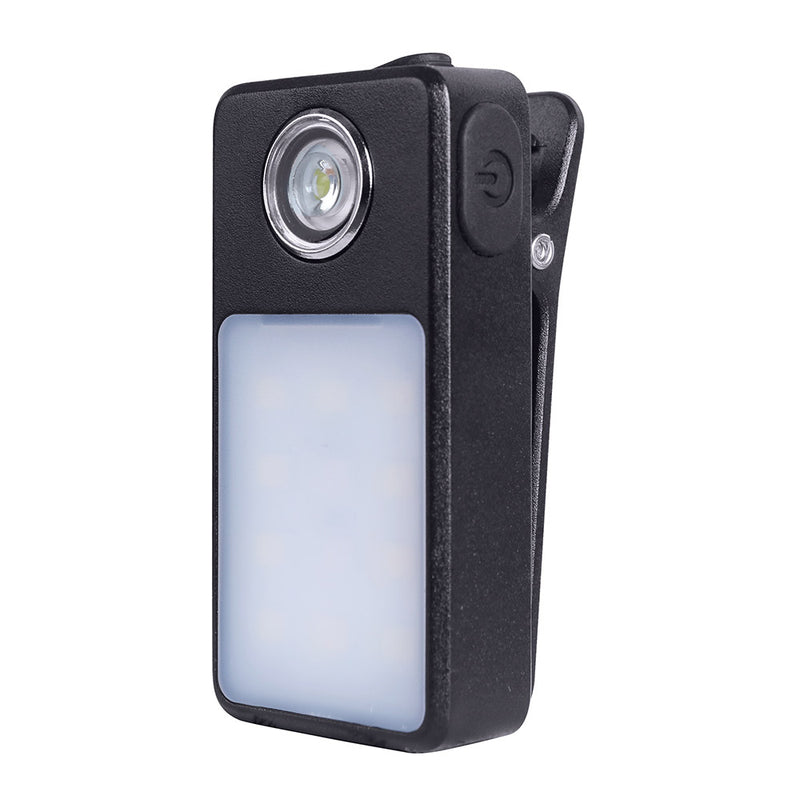
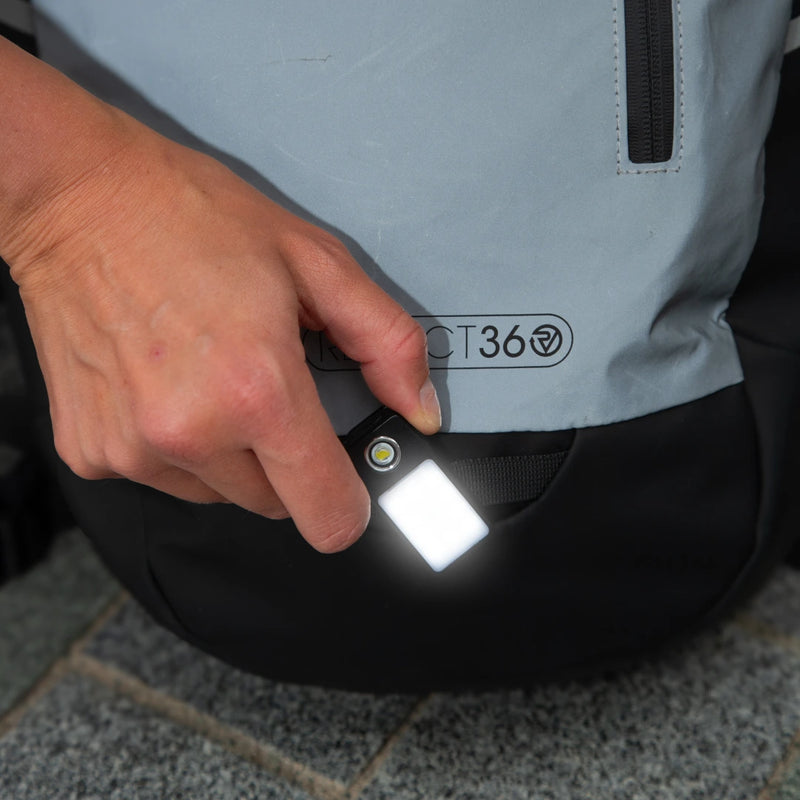
A Clip on Light attaches to most bags and straps |
Run one steady and one flashing light at the rear. Flashing catches attention, and a steady light helps drivers judge your distance.
Running: light your front and your back
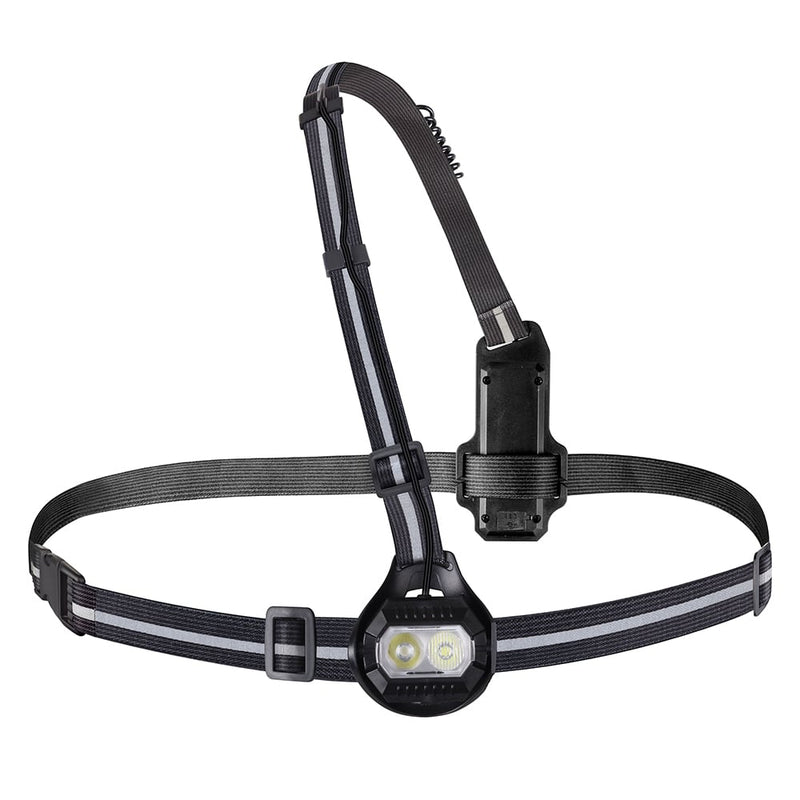
- Front: a chest light. A chest light is steadier than a headtorch, doesn't bounce, and lights the ground just ahead of your feet. The LED360 Running Chest Light gives you 500 lumens.
- Back: a red rear light. Many runners only light their front, but traffic coming from behind is the bigger risk. Clip a rear light to your waistband or the back of your jacket.
- Both at once. The LED360 Cycling/Running Vest has white front and red rear LEDs built in, so you can't forget either.
Plan a route that works in the dark
The fastest route in summer isn't always the best one in winter. A few small changes make the commute home feel far more comfortable.
- Recce it in daylight first. Ride or run your winter route at the weekend so you know the surfaces, junctions and unlit stretches before you meet them in the dark.
- Choose lit over short. A slightly longer route with street lighting usually beats a shortcut through unlit lanes.
- Check off-road paths. Canal towpaths, parks and greenways are often unlit, and some parks lock their gates at dusk. Check opening times before you rely on one.
- Avoid the riskiest junctions. Busy roundabouts and left turns alongside large vehicles are where cyclists are most exposed. Segregated cycle lanes or quieter parallel roads are worth a small detour.
- Runners: face oncoming traffic. Where there's no pavement, the Highway Code (Rule 2) advises walking on the right-hand side of the road, facing traffic. The same logic applies when you run.
- Allow for the weather. Rain, spray and wet leaves reduce visibility and grip for everyone. Leave more space and slow down on wet evenings.
- Watch dusk and dawn. Light levels are uncertain, and some drivers haven't switched their headlights on yet, so wear both fluorescent and reflective kit at these times.
- Tell someone your route. On longer or quieter commutes, share your route or live location with a friend or family member.
Your five-minute dark commute checklist
Run through this before your first commute after the clocks change.
- Front and rear lights charged, fitted and working
- Rear light not covered by your jacket or bag
- Reflective layer on, with nothing covering it
- Reflective bands on your ankles, plus your wrists if you're running
- Bag reflective, or covered
- Route checked for unlit stretches and park closing times
- Someone knows your route, if it's a long or quiet one
Small changes to your kit make a big difference to how visible you are. Get your commute ready before Sunday, and head home with confidence all winter.